
Sorting New Jersey Bins Correctly
New Jersey requires source separation by law. We break down the state-level mandates and county variations so you can sort with total confidence.
FAQs
How do I select?
Use the dropdown menu to pick your state for tailored recycling rules.
What guides are included?
Each state guide covers local recycling rules, accepted materials, and disposal tips.
How often are guides updated?
We research thoroughly and update every state’s recycling guide regularly to reflect the latest rules.
Can I suggest changes?
Yes, user feedback helps us keep guides accurate and useful.
Are commercial rules included?
Our guides focus mainly on residential recycling regulations.
Where do you get your information?
We pull data from official state websites and trusted environmental sources to ensure accuracy.
Mandatory Source Separation Act
Under New Jersey law, recycling is not a recommendation—it is a statutory requirement. Every household, business, and institution must separate designated recyclables from trash.
Statewide Legal Mandates
Municipal Enforcement Rules
Passed in 1987, the Mandatory Source Separation Act requires all municipalities to designate at least three recyclable materials for separation, keeping reusable resources entirely out of landfills.
Local towns enforce these rules through curbside inspections and municipal ordinances. Non-compliance can lead to warnings, rejected bins, or fines depending on your specific county policy.
County Sorting Variations
While state law mandates recycling, individual New Jersey counties determine exactly which plastics, paper grades, and glass containers their local processing facilities can accept.
Plastics 1 and 2
Corrugated Cardboard
Glass Containers
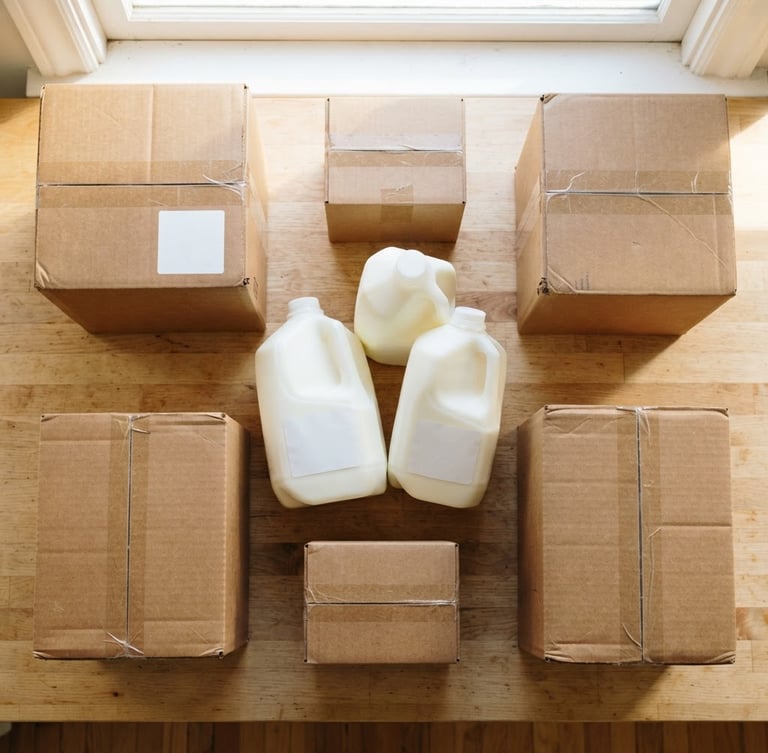
Rigid plastic bottles, jugs, and jars with resin codes 1 and 2 are universally accepted across all twenty-one New Jersey counties. Always rinse containers and discard loose plastic caps.
Clean, flattened cardboard boxes are mandatory everywhere. Remove plastic packing tape, shipping labels, and Styrofoam inserts before placing them flat inside your designated blue curbside bin.
Clear, green, and brown glass bottles and jars are highly recyclable. Avoid mixing in window panes, drinking glasses, or ceramics, which ruin the melting process at local plants.
Need the exact schedule and rules for your specific municipality? Download our comprehensive county-by-county directory to keep on your refrigerator.
Blue Bin Basics
Clear sorting. Real habits. No eco-guilt.
GUIDES
Home
About
Materials
For Kids
State Rules
Programs
COMMUNITY
hello@bluebinbasics.org
Youth-led action across NJ & CA
Est. 2020
© 2026 Blue Bin Basics-Founded by Diya Jain in 2019 to empower local youth.
WISH-CYCLING STOPS HERE